Timberline Log Homes Company
427 Orondo Avenue • Wenatchee, Washington 98801
Office:  509-662-8789 • Fax:  509-663-0186

A division of Mertes Adco


IF IT CAN BE IMAGINED, WE CAN CREATE IT

Log Homes - Log Cabins - Log Lodges  
Packages - Kits - Designs - Plans


 Serving - Washington, Alaska, Oregon, California, Nevada, Arizona, New Mexico,
Idaho, Montana, Utah, Wyoming, North Dakota, Minnesota, Wisconsin,
Illinois, South Dakota, Iowa, Nebraska, Colorado, Kansas, Missouri,
British Columbia, Alberta, and all regions of the United States and Canada


 Whether you are considering a log home, log cabin, or log lodge, Timberline can provide a materials package that meets your needs.  Choose from a selection of more than 150 plans, modify as desired, or a complete custom design can be provided.  Options include a Basic Log Package to Complete Materials Packages customized to your needs.

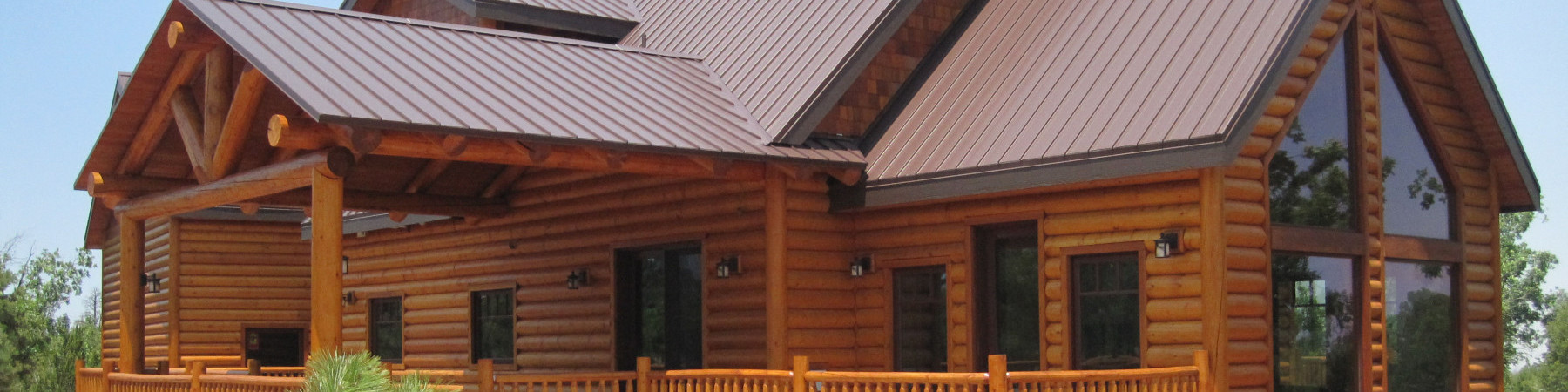
 From small log cabins erected as 'do-it-yourself' projects, to grand log homes and log lodges, Timberline has a reputation of quality and value.  Choose 6-inch to 16-inch, Swedish coped logs, or D-profile logs, harvested from dead stands of timber in either standard or cabin grades. Or, you can elect to conventionally frame the structure and apply saddle-notched log siding to make it appear to be built with full logs from the outside.  

 Timberline log homes are well designed.  Precision notching makes log shells fit together tightly.  Because Timberline's milled logs are in a naturally dry state that is ideal for log construction, settling and shrinking are minimal.  The result is a log home that fits together well without having to deal with problems sometimes associated with other log construction. 

 Look through the informative Timberline web site, send us your
questions, and, if desired, specify design elements you want in a log cabin, log home, or log lodge this web site's Pre-plan Estimate page and we will email back an estimate of prices based on current  costs. You can depend on unsurpassed value with Timberline log homes.


Steps in planning a log home or cabin

1) If financing from a lending institution (bank, mortgage company) is to be used, then determine how much you qualify to receive. This is very important - there isn't any sense incurring unnecessary expense by working toward more log home or cabin than you may be able to afford. Nowadays, especially, a good early step is to submit a Pre-Plan Estimate request through the Timberline Log Homes web site (click on Pre-Plan Estimate at the top or bottom of web site pages). Based on averages for a specific size and style of structure, along with specified design elements, you'll be able to get an idea of costs involved. This allows you to adjust expectations to meet your budget. Also, many people aren't aware that a construction loan typically won't be issued unless a professional builder is involved to guarantee that the project will be completed to a specified degree in a timely manner. Consequently, 'do-it-yourselfers' need to have enough 'cash' to substantially complete the home or cabin without need for financing.

2) Decide where the log structure is to be built and purchase land. Purchase of the building site should always come before 'falling in love' with a design. If you haven't already purchased land for your log home or cabin, then prepare to spend somewhere between 15% and 40% (or more) of the construction costs on a 'piece of dirt' depending on its size, location and 'desireability'. Because the building site plays an important role in determining log home design elements including dimensions, it is important to secure land before investing too much time and energy into the specifics of design. It isn't wise to put the cart before the horse. A word of caution - a building site that seems like a bargain priced substantially less than another, may turn out to be more expensive after factors associated with site prep and building are taken into account. It is often advisable to get imput from your realtor and/or general contractor regarding 'buildability' of a certain piece of land and what may be required to prepare the building site.

Once you've found and purchased terra firma for a log home or cabin, a location in a rural area may mean that engineering evaluations will need to be performed including septic perc tests and design, soil characteristics and compaction assessments, addressing environmental concerns as well as the drawing of a site plan. Be prepared to spend $8,000 to $30,000 on a septic system if one is necessary. A well may also need to be dug in many cases. All of these elements often play a role in determining where the log home is to be situated.

3) Make the design work for you. The design process at Timberline Log Homes typically begins when a selection of log home elevation drawings and floor plans is emailed based on specifications that have been provided. In most cases, design elements and floor plans are ultimately modified to meet individual needs - almost all the plans are custom to some degree. Timberline Log Homes can also work from drawings generated by other sources, including architects. At this point, when the basic structure and design elements are known, a Preliminary Estimate is provided to make sure budget considerations are accounted for and, if not, making necessary adjustments. Once drawings are completed keeping boundary setbacks and terrain in mind, then engineering of the design to the building site location is usually required in most states. If the lot is heavily wooded, then trees may have to be removed in order to prepare the building site as well as to create space for machinery and materials.

After drawings are completed and stamped by a state licensed engineer, then, in most cases, the general contractor submits them to the local building department for approval and issuance of a building permit. In the meantime, specific log takeoffs, cutting and notching at the mill and assembly of the materials package are completed. At this time, site preparation usually commences with road construction or improvements, preliminary grading and excavation. Once the building permit is issued, then foundation work begins followed by the delivery of the log home package and erection of the log shell.

It may seem like a lot to accomplish, but it really isn't any more than what would be required on the same site if conventionally 'stick' building the structure. The timeline, if building with logs, for design & engineering, site prep, permitting and construction usually extends twenty to sixty weeks depending on the complexity of design elements, size of the structure, permitting load of the planning department, schedules of builders and subcontractors, and specific location of the building site.

It's important to be realistic when entering into having a log home or cabin built. It will take some time to complete, and don't expect otherwise. But don't forget that a Timberline log structure often turns a rather ordinary piece of land into something quite special, and a spectacular site into something absolutely incredible. Either way, a Timberline log home package becomes an investment to appreciate.


Visit the Timberline Log Homes Photo Gallery
and Interior Photo Gallery